


By Adem Kılıç, Political Scientist
The war between the U.S., Israel, and Iran not only altered the balance of power and the power struggle among these countries but also seriously shook the security architecture that Gulf countries had been building for years.
Because following the approximately 130-day war, a much clearer question now faces the Gulf states.
Is the U.S. truly a force that ensures security in the region, or does it view the Gulf states merely as a massive military platform to serve Israel’s security and its own global objectives?
The fundamental reason for the emergence of this question can be summarized as follows: Washington’s response to Iran’s targeting of U.S. military presence, bases, and strategic infrastructure in some Gulf countries failed to instill the expected sense of security in Gulf capitals.
Moreover, the fact that Saudi Arabia and Qatar, in particular, were not sufficiently briefed at the start of the war—and that only the UAE, a signatory to the Abraham Accords, was briefed—remains a lingering issue.
The “trust” of the security umbrella is being questioned
For many years, the Gulf countries have based their relationship with the U.S. on a very simple equation.
The U.S. would provide security, while the Gulf countries would form the economic and geopolitical foundation of this system through energy, military bases, arms deals, and strategic partnerships.
However, the strategy the U.S. pursued during the war it launched against Iran put this mutual relationship of interests—and the underlying equation—to its toughest test yet.
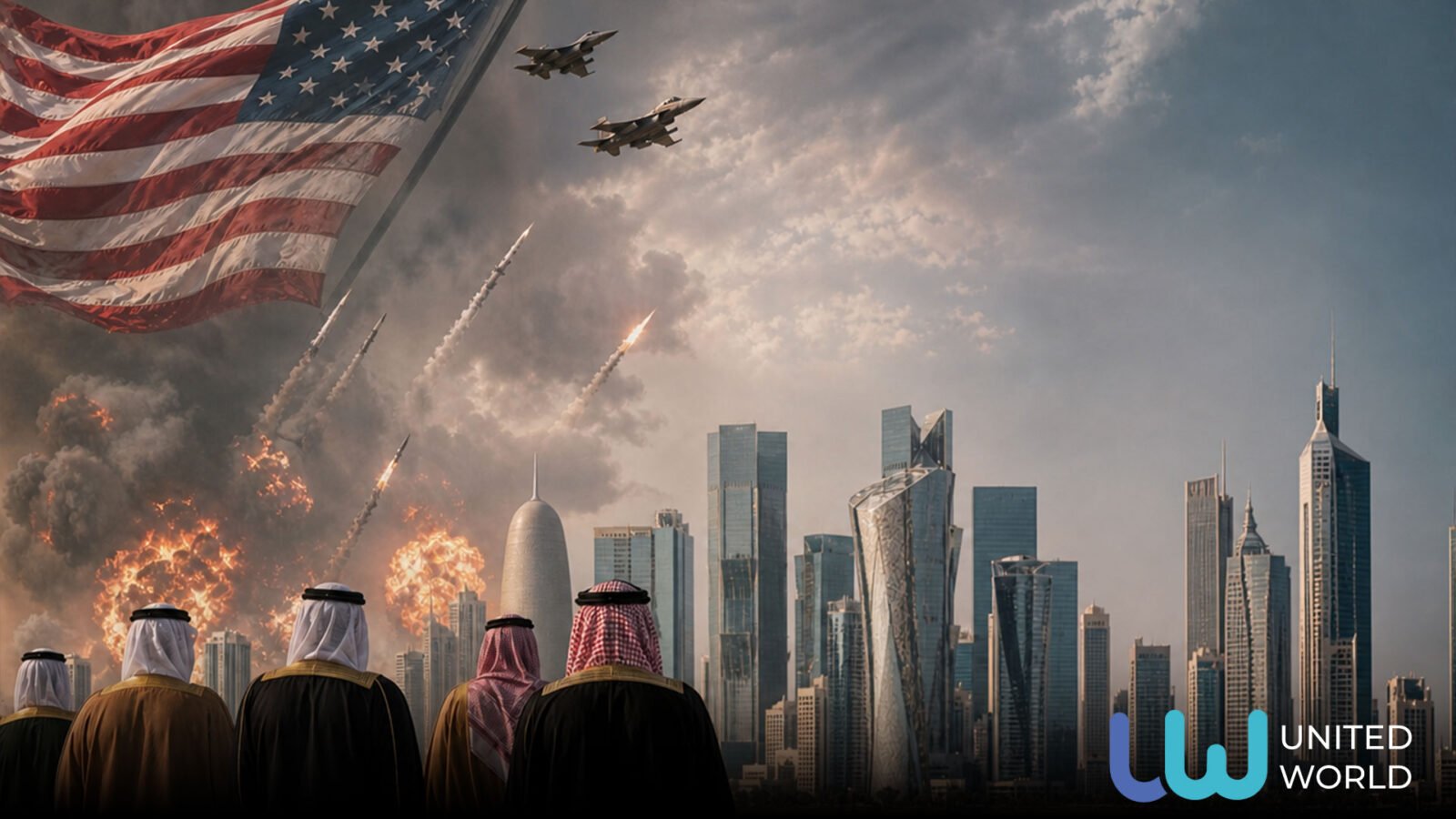
Iran’s missile and drone attacks directly dragged Saudi Arabia, Qatar, the United Arab Emirates, Bahrain, Kuwait, and other regional countries into the war, and as U.S. bases and the U.S. military presence in the region became targets, the U.S., adopting a strategy that prioritized Israel’s security, virtually ignored the Gulf countries’ requests for air defense systems and ammunition.
Furthermore, the Gulf countries felt reassured not only by the air defense systems they had acquired from the U.S.—such as Patriot and THAAD—but also by the political and military guarantees they believed they had received that the U.S. would enter the war on their behalf.
However, that certainly did not happen, and it became clear that the “U.S. security umbrella” was not an absolute guarantee of security.
The Abraham Accords Did Not Bring Security Either
The fundamental strategic rationale behind the Abraham Accords was based on the idea that normalization between Israel and Arab countries would bring economic cooperation and security to the region.
From the perspective of the Gulf countries, one of the key reasons for rapprochement with Israel was the Iranian threat.
Israel’s intelligence capabilities, missile defense technologies, air power, and influence over the U.S. were viewed as a significant security advantage for the Gulf states.
However, the reality revealed by the war has deeply shaken this calculation!
After Israel directly drew the U.S. into the war, the Gulf countries also found themselves in the war’s crosshairs, leading them to begin asking the following question:
Did normalizing relations with Israel truly make us safer, or did it turn us into one of the natural targets of Israel’s war against Iran?
In other words, setting aside the economic and security expectations of the Abraham Accords, it became clear that these countries were viewed merely as tools for Israel’s security and the U.S.’s regional political projects.
In short, rapprochement with Israel not only failed to eliminate the Iranian threat for the Gulf countries but, on the contrary, increased the risk of direct conflict with Iran.
Gulf countries no longer want a single protector
In my opinion, one of the most significant outcomes of the war has emerged here.
Of course, the Gulf countries will not break away from the U.S. in the short term. Given the investments made and the integration of infrastructure, such a breakaway in the security sphere is not possible in the short term.
For this reason, there is no doubt that at present, the U.S.’s military presence in the region, its intelligence capabilities, air defense systems, naval power, and advanced weapons technology remain indispensable to these countries.
However, the Gulf countries have also recognized the reality that they must no longer remain dependent on a single security provider.
Saudi Arabia’s efforts to strengthen its ties with China, maintain contacts with Russia in the energy and defense sectors, and elevate its relationship with Türkiye to a new strategic level across a wide range of areas—from defense to the economy—along with the Gulf countries’ increased investment in their own military capabilities, indicate that this new strategy will accelerate in the coming period and that other countries, such as Qatar, will also join in.
The war in Iran has revealed a very clear reality to the Gulf countries.
Being an ally of the U.S. may mean supporting all of its wars. However, it is no guarantee that the U.S. will intervene in all of your wars with the same determination.
Türkiye’s importance is growing!
It is precisely at this point that Türkiye’s regional influence is also increasing significantly.
Since the start of the war, Türkiye has stated that it views both Iran’s attacks and the U.S. and Israel’s attacks on Iran as dangerous to regional stability, and has called for a diplomatic resolution to the crisis.
The fact that Türkiye’s long-held position—that Israel’s aggression could drag the region into an uncontrollable war—has proven correct has opened a new window of opportunity for Gulf countries that realize they cannot protect themselves despite the Abraham Accords.
In the wake of these two developments, Türkiye has become not merely a NATO member or a defense industry supplier for the Gulf countries, but also a key element of regional balance.
Indeed, with its diplomatic clout, military capabilities, and growing strength in the defense industry, Türkiye has become both a model and an indispensable partner for the Gulf countries.
After all, this combination—of being militarily independent by producing air defense systems, unmanned aerial vehicles, naval platforms, electronic warfare systems, missile technologies, and land systems; successfully establishing a neutral foreign policy accepted by all parties; and being able to form strategic partnerships with all countries—is virtually unmatched by any other nation in the world today.
Conclusion
The war, which has been raging for approximately 130 days, has taught the Gulf countries a very important lesson and demonstrated that neither the U.S. security umbrella alone nor concessions such as the Abraham Accords signed with Israel can ensure their sense of security.
At this juncture, the issue for the Gulf countries is certainly not to completely abandon the U.S. on this matter. The issue is that they have come to realize a new reality: the U.S. must no longer be their sole security option.
And Türkiye is increasingly coming to the fore in this new era and will continue to do so.
Because the Gulf countries are no longer simply looking for a country to protect them. They are also looking for a partner that can engage with Iran, counterbalance the U.S., take a stance against Israel’s regional policies, and generate genuine military capabilities through its own defense industry.
In other words, the new era in the region appears set to begin not with the U.S. withdrawing from the region, but with the Gulf countries refusing to live under the security umbrella of a single power.