


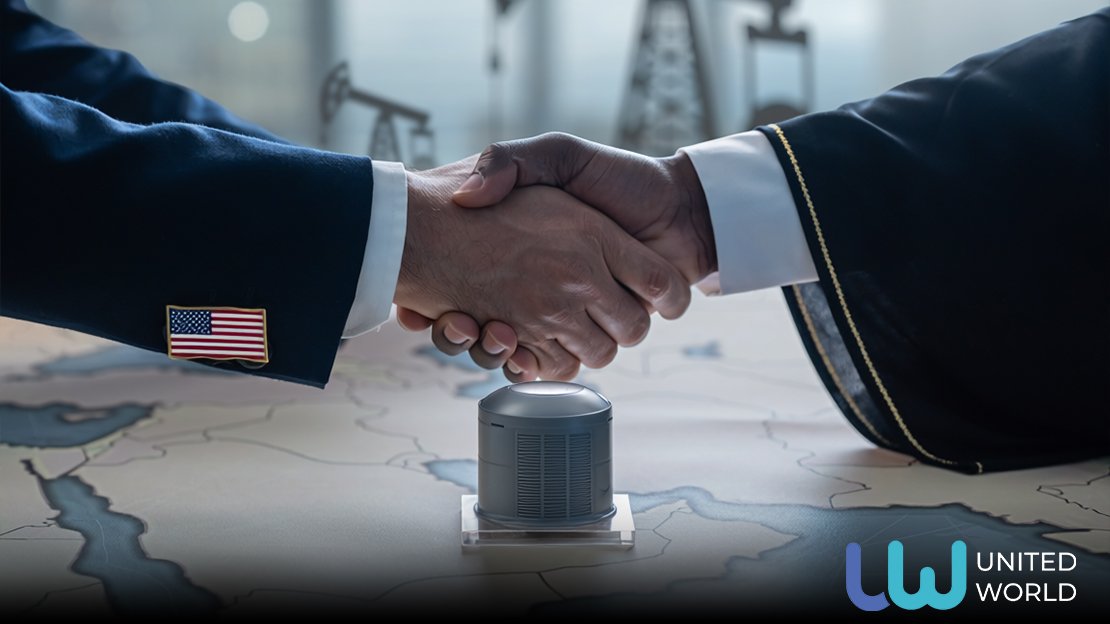
As is always his habit, US President Donald Trump seems to draw from a well fundamentally different from that of his predecessors. Consequently, all his political stances and decisions appear as a rebellion against the constraints that bound the occupants of the White House for decades. At times, he looks like a rebel with no respect for the legacy of those before him or the tenets of the deep state; at others, he appears as a pragmatic president pursuing his country’s interests regardless of the cost—paying no mind to his critics and disregarding prudent diplomacy. More often than not, he cannot escape accusations that the sole driver behind all his decisions is personal and financial self-interest for himself and his family, or that he is an eccentric narcissist seeking only those who flatter him and stroke his ego.
Thus, he leaves analysts bewildered as they examine his positions, decisions, and policies toward Latin America, China, Europe, and even the Middle East. One moment, he lashes out at someone so fiercely that one would think an escalating crisis is on the horizon with no way out; the next, he declares war for no clear reason, only to halt it by a unilateral decision lacking convincing logic.
Therefore, the nuclear agreement his administration concluded with Saudi Arabia a few days ago cannot be separated from this prevailing context of his tenure in the White House. While former US presidents consistently conditioned Saudi Arabia’s access to American nuclear technology—vital for peaceful nuclear energy programs—on the normalization of its relations with Israel, Trump granted Riyadh what it sought without obtaining any concessions in favor of Israel in return.
A Departure from the Predecessors’ Approach
The US President attempted to convey to his followers that he had never abandoned the course set by his predecessors regarding this condition, writing in a post on Truth Social that approval of the nuclear deal was strictly contingent upon Saudi Arabia joining the Abraham Accords.
In reality, however, this statement is entirely baseless. According to an informed Saudi source, the text of the peaceful nuclear cooperation agreement signed between Saudi Arabia and the United States contains no clause linking its implementation to the normalization of relations with Israel.
“Riyadh’s stance on normalization with Tel Aviv has not changed at all, and the Kingdom remains committed to a clear political pathway leading to the establishment of a Palestinian state,” the source said, adding that the US President’s statement on Truth Social was made without prior coordination with Saudi Arabia.
The American news outlet Axios, which reviewed the text of the agreement, also confirmed that there is no reference linking the execution of the nuclear energy deal to normalization.
This reality simply demonstrates that Saudi Arabia secured the deal without making any concessions—unlike those previously demanded by former President Joe Biden’s administration, which viewed nuclear cooperation as part of a broader package that included a normalization agreement with Tel Aviv.
Saudi Arabia’s gains do not stop there. The agreement allows the Kingdom to enrich uranium in the future and places limits on the inspections that could be conducted on the Saudi program. This issue is viewed not only as controversial—out of concern that it might encourage the Kingdom to enter a nuclear arms race down the line by sidestepping inspection rights granted to international monitors—but also as another major US concession to Saudi Arabia.
This agreement differs from the one Washington signed with the United Arab Emirates, in which the UAE permanently renounced the right to enrich uranium and accepted full oversight of its nuclear program by the International Atomic Energy Agency (IAEA).
Fears of Riyadh entering a nuclear arms race are hardly unfounded. In a 2018 interview with CBS News, Saudi Crown Prince Mohammed bin Salman confirmed that his country would develop a nuclear bomb if Iran managed to do so.
These two major concessions granted by Washington represent a massive shift in its policy, which historically has never permitted a central strategic role in the Middle East for any nation—regardless of its shared interests with the United States—except Israel. Consequently, they cannot simply be explained away by the US President’s recklessness or defiance.
Two American Shifts
In fact, this major development can be read through the lens of two significant shifts in US policy that many have overlooked, obscured by the smoke bombs President Trump so adeptly uses to cover up the controversy generated by his decisions.
The first shift is that the United States is reshaping its global policy away from what others expect of it as a superpower that long touted international law and human rights—a tactic used for decades to leverage weaker nations and impose its political and economic dominance. Today, Washington has decided to untether itself from all responsibilities and commitments toward allies, adversaries, and international institutions alike. It views these obligations as constraints that strip away the flexibility it deems essential in the battles over energy, technology, influence, and ensuring its survival as the sole dominant power.
The second shift is that just as Washington has shed its political and legal commitments, it has also cast aside its moral obligations. It now views any political move that does not yield massive economic gains as lacking utility—especially financial gains that can directly benefit the president personally or the financial elite surrounding him. If oil companies were the driving force when Trump decided to arrest the President of Venezuela, then companies operating in the construction of nuclear reactors and the supply of enriched uranium are likewise the primary catalyst behind the Saudi nuclear deal.
Only by reading the US-Saudi nuclear agreement within the framework of these two shifts can we truly understand what has happened—and what is yet to come.
The Collapse of the Theory of Israeli Leadership
According to the first shift, Washington no longer views the Middle East merely as an oil-rich region that must enjoy stability, nor does it prefer to see Israel simply as its leader.
This former state of affairs made it easy for China—the fierce rival of the United States, which aspires to lead the world or at least shatter America’s monopoly on global hegemony—to quietly build strong and tight relations with the gas- and oil-rich countries of the region. These ties ensured stable crude supplies to fuel China’s industrial and economic boom, while simultaneously allowing Beijing to establish potent influence through mutual technical cooperation agreements and investments across regional capitals.
Washington’s adherence to international law and its institutions would never enable it to stem this Chinese advance, nor would it deter the Gulf States—ever wary of all sides—from continuing to open their doors to Beijing.
The solution, quite simply: just as the Trump administration deprived China of a portion of its energy supplies through a minor change at the top of power in Venezuela, why not repeat the game in the Gulf region, albeit with an alternative plan?
This region represents a vital source of the oil and gas China needs, and Washington cannot under any circumstances simply order its Gulf friends to cut off those supplies to Beijing—doing so would be illogical, unlawful, and contrary to free-market principles. Hence, the solution lay in igniting the region with a war that disrupts the maritime straits relied upon by oil tankers, while simultaneously feeding the Gulf states’ appetite for American arms.
From this perspective as well, the theory of Israeli leadership in the region is no longer useful to Washington’s interests, which now see advantage in a region that can be ignited at any moment. This desired state of affairs requires a number of actors perpetually competing for regional leadership, with each of them permanently lacking the decisive edge required to seal it. Just as Israel lacks the empathy that would allow it to penetrate the hearts and minds of the region’s peoples, Iran lacks sectarian consensus, depriving it of crucial leverage. At the same time, Saudi Arabia possesses those very leverage points, yet it permanently lacks the necessary technology and arms capacity, leaving it in constant need of American backing.
Therefore, US acceptance of concessions to Saudi Arabia within the nuclear agreement is a realistic acknowledgment that it is reshaping the region. It will continue to do so by creating perpetual grounds for friction and rivalry, enabling it to set the region ablaze whenever and under whatever circumstances best serve its interests. The Saudi nuclear program will remain a source of anxiety for its rivals—fearing a shift from civilian to military capacity—while remaining declawed except to the extent that it serves US objectives. To understand this last point, one need only recall the roles played by the Kingdom in the 1980s in recruiting extremists from across the Islamic world and directing them to fight the Russian presence in Afghanistan.
American Financial and Economic Interests
As for the second shift, the concessions granted by Washington to Riyadh in the agreement would not have occurred had they not been tied to massive, staggering gains for American companies. In this deal, the United States never considered any potential benefits Israel might reap from normalization, nor did it heed reservations regarding the accelerated threat of nuclear proliferation in the region.
According to The New York Times, constructing new nuclear reactors in Saudi Arabia and supplying them with the nuclear fuel required for their operation could generate substantial financial returns for companies with close ties to Trump, as well as senior members of his administration and their financial backers.
The US President’s sons, Eric Trump and Donald Trump Jr., hold a partial stake in a nuclear fuel company named Quantum Leap Energy. Furthermore, Trump’s media and technology company has plans to merge with a nuclear energy startup known as TEE Technologies.
Among the prospective beneficiaries of the nuclear deal is the American firm Westinghouse, a commercial partner of the real estate company Newmark, in which the sons of US Commerce Secretary Howard Lutnick hold a partial stake. Another prominent figure poised to benefit from the agreement is Peter Thiel, a major donor to Trump and a key investor in the nuclear fuel company General Matter.
Naturally, however, the nuclear agreement between Saudi Arabia and the United States cannot be understood apart from acknowledging the reality that Middle Eastern nations are actively seeking to develop their nuclear infrastructure—and will proceed with those efforts even without US participation. Thus, through this agreement, Washington sends a clear signal to the nations of the region that they do not need to turn to China for cooperation in this domain, and that it is fully capable of demonstrating the flexibility required to develop their nuclear infrastructure.
Saudi Political Gains
In light of how bold this move is on the American side, it translates into a major victory for Saudi Crown Prince Mohammed bin Salman. For years, he has sought a nuclear deal with the United States as part of a broader effort to strengthen his country’s ties with Western nations—allowing him to present himself as a paramount regional leader who dictates his own terms and achieves what others cannot.
Given the fierce rivalry between Abu Dhabi and Riyadh for regional leadership and geopolitical clout, this deal will inevitably be compared to the nuclear agreement the United States struck with the UAE in 2009. The comparison will unmistakably favor the Saudi leader, particularly since the UAE agreement not only entailed rigorous IAEA inspections, but also renounced the right to enrich uranium on Emirati soil. By contrast, the agreement with Riyadh permits Saudi Arabia to enrich uranium domestically on its own.
According to observers, these gains grant the Kingdom a formidable deterrent capability in the region simply by establishing the potential capacity to develop nuclear weapons, even if it never moves to do so. At the same time, however, it fuels fears of an arms race in a region that has spared no effort in that direction even prior to such agreements.
Yet, another perspective views it primarily as a economic and civilian agreement that will allow Saudi Arabia to diversify its energy sources and harness nuclear power to meet its surging demand for electricity.
According to energy experts, acquiring nuclear power could eventually reduce Saudi Arabia’s dependence on oil and shield it from the volatility of global oil markets—especially after the recent war exposed just how easily oil fields, refineries, and tankers can be targeted.
Nevertheless, both viewpoints concur that while the economic returns of this agreement will not materialize for roughly a decade—the time it may take to construct and operationalize the nuclear plants—the short-term political payoff is manifest: Saudi Arabia, already one of the most powerful Gulf nations, is further cementing its status as a principal regional power without having to recognize Israel or abandon its demand tying any future normalization deal to the establishment of a Palestinian state.
Serious Concerns
This particular point perhaps reflects an assessment within the Trump administration that achieving a diplomatic breakthrough between Saudi Arabia and Israel is unlikely in the near future. Moreover, what may have accelerated the conclusion of this agreement—without a clear explanation of its timing or even prior groundwork—is the US war against Iran.
In my personal assessment, Washington sought to ease tensions with Saudi Arabia and its other Gulf allies, who have been targeted by Tehran since the outbreak of the conflict. One of the key signs of this friction was Saudi Arabia’s explicit position early in the war, which prohibited the United States from using its airspace.
However, if the ongoing war against Iran served as a justification encouraging the US administration to seal the deal with Saudi Arabia in this manner to allay its concerns, opponents also find in the timing a reason to reject the concessions granted by the administration.
From the critics’ perspective, the US war against Iran stems primarily from concerns over the Iranian nuclear program, whereas the concessions granted to Riyadh raise similarly serious concerns and could lead to a frantic nuclear arms race in the Middle East. They argue that the agreement might encourage Iran to press ahead with its nuclear ambitions rather than curbing them.
According to Democratic US Representative Ro Khanna, this agreement represents a major concession to Saudi Arabia that will only bolster Iran’s ambitions and lead to further destabilization in the region.
There are also those who oppose the deal on the grounds that acquiring uranium enrichment capabilities will grant Saudi Arabia a powerful leverage point to extract future concessions from Washington—including new security guarantees—by implicitly threatening to convert its program to military purposes unless the US provides greater military protection. Proponents of this viewpoint to precedents such as South Korea and Germany, where the United States leveraged its security umbrella to persuade its partners to abandon their nuclear programs.
The administration, however, denies all of this, maintaining that the agreement is accompanied by a safeguards protocol to prevent nuclear proliferation. According to a statement by US Energy Secretary Chris Wright, the agreement adheres to the highest standards of nuclear safety and non-proliferation.
Furthermore, according to a statement given to Reuters by an administration insider, the US-Saudi agreement provides a legal framework for cooperation in the nuclear fuel cycle—which includes uranium enrichment—but does not obligate Washington to transfer any related technology or capabilities to the Kingdom.
A calculated strategy
The administration’s stance is not without supporters outside its ranks. Experts argue that the agreement represents a victory for the United States over China and Russia, given that Saudi Arabia had previously stated that if a partnership with the US failed to materialize, it might cooperate with Beijing or Moscow—both of which apply different standards regarding nuclear non-proliferation.
According to Jennifer T. Gordon, director of the Nuclear Energy Policy Initiative at the Atlantic Council’s Global Energy Center, the deal is not only a win for the US nuclear energy industry, but also a victory for the US-led global non-proliferation regime. Gordon noted that Saudi Arabia has repeatedly underscored its determination to adopt nuclear energy and launch a civilian nuclear program; thus, the question was never whether the Kingdom would do so, but rather which partner it would collaborate with: the United States and its allies, or Russia and China.
Others view the agreement as reinforcing a deliberate precedent set by President Donald Trump’s administration. They argue it could serve to justify a similar deal with Iran in the future once the war subsides, in exchange for the understandings he aspires to reach with Tehran on other matters—most notably regarding the management of the Strait of Hormuz post-war.
From this perspective, Trump had previously shed his commitment to make ballistic missile production one of the issues prohibited to Iran. The memorandum of understanding signed between Tehran and Washington weeks ago was completely devoid of any reference to missiles; at the time, the US President justified his reversal by arguing that if other countries could possess such missiles, it would be unfair to deny the Iranians some of their own.
In our view, this perspective carries a great deal of weight, given President Trump’s established habit of raising the stakes against his adversaries to easily secure his primary objectives. Although some point out that the Strait of Hormuz was open prior to the war and was not originally among the administration’s core concerns, this does not invalidate the argument. Since his re-election, President Trump has repeatedly spoken of the United States’ right and desire to own—or secure free passage through—maritime straits and waterways, from the Panama Canal to the Suez Canal and the Strait of Hormuz. Such rhetoric signals a clear American desire to exert control over these channels and straits for reasons that serve its global strategy.
Clearly, the nuclear agreement between Saudi Arabia and America was by no means accidental—neither in its outcomes nor in its timing. In reality, it is the product of a calculated strategy that kills multiple birds with one stone, politically and economically. Most importantly, it reshapes policy in the Middle East in a manner that allows its stability to be disrupted at any moment by subjecting it to contradictory pressures—pressures from which relief can only be purchased at costs that lead to new pressures altogether.