

From the editors
Sergey Glazyev, Academician of the Russian Academy of Sciences, Doctor of Economic Sciences, Professor, is the author of a fundamental theory of the change of technological and world economic orders. His biography differs from that of an armchair scholar: for decades he has combined science with participation in state policy. Before us is a scholar who for many years has taken part in shaping the very reality that he studies.
By Sergey Glazyev
1.The world on the threshold of a systemic transition to a new world economic order
The modern world order is undergoing a systemic crisis. Not only is the former architecture of international security being destroyed — the economic centers of power, the financial system, the technological balance and the very principles of international interaction are changing. In terms of the theory of world economic orders, this means a transition from one historical system to another. The old institutions are no longer capable of ensuring stability, and new ones have not yet formed.
That is precisely why today there is again a historical need for a “Yalta” on whose historical agenda the question of redistributing the world among several powers must not be placed. Its task is to harmonize the rules of peaceful coexistence of the new, emerging integral world economic order. It must be based on the principle of indivisible security for all countries of the world. Including, of course, the Black Sea region, Asia Minor and the Middle East, in which Türkiye occupies a special place, connecting Europe and Asia, the Black Sea and Mediterranean regions, and possessing significant diplomatic potential. “Yalta 2.0” could create conditions for advancing its legitimate interests in ensuring regional stability, developing transport and energy corridors and expanding Eurasian trade — on the basis of equal dialogue, respect for sovereignty and mutually beneficial cooperation.
2. Three Leaders — One Historic Opportunity
In February 1945, Stalin, Roosevelt, and Churchill met in Yalta. The war was still ongoing, yet the leaders already understood that victory over Nazism did not, in itself, guarantee peace. A new system of international relations had to be established. At the time, this involved the division of spheres of influence, the creation of the United Nations, and the formulation of principles capable of preventing a recurrence of global catastrophe. This three-way handshake halted the world’s slide into chaos and laid the foundations for an order that endured for decades.
Today, the situation is different, but the analogy remains clear: humanity has once again reached a historic turning point. The issue at hand is no longer the division of a post-war world, but rather its preservation—specifically, the agreement on rules for the peaceful coexistence of states within an emerging multipolar system, based on the principle of the indivisibility of security—a principle to which the leaders of both Russia and China have repeatedly pledged their commitment.
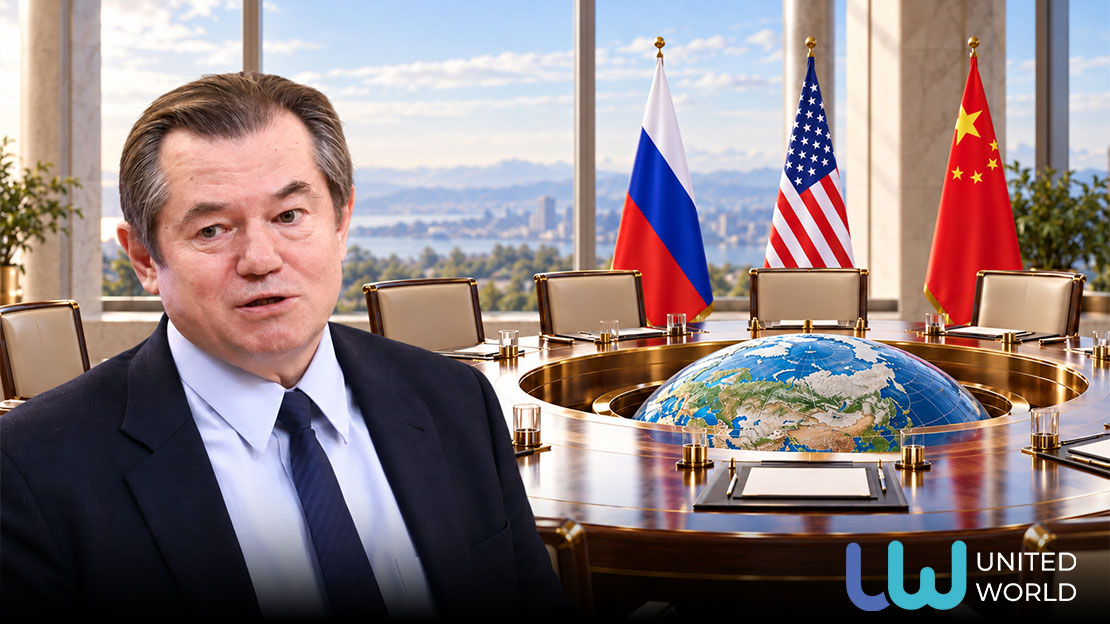
The meeting between Russian President Vladimir Putin, U.S. President Donald Trump, and Chinese President Xi Jinping, set to take place on the sidelines of the APEC summit, offers hope that it may provide the necessary impetus for such a process. This is not because these three dynamic leaders have the power to “decide the fate of the world” on their own; rather, their historic role lies in initiating a negotiating process—one in which the interests of the world’s leading civilizational centers, including the Republic of Türkiye, can be aligned with shared rules for security and development.
3. The Primary Goal: A New Global Security System
Today, issues such as Ukraine, Taiwan, the Middle East, European security, sanctions and trade wars, technological competition, the arms race, and the transformation of the global financial system may appear to be separate problems. In reality, however, they are linked by a common contradiction: the tension between the emergence of a new, multipolar world and attempts to preserve the institutions of the old global order.
Consequently, resolving individual conflicts without altering the international system itself would offer only a temporary respite. A “Yalta 2.0” framework must be based on a different principle: the security of one nation cannot be achieved at the expense of another’s security, nor can economic development be pursued by undermining the development of one’s partners.
The first practical outcome of “Yalta 2.0” could be a new, comprehensive arms limitation and reduction treaty—a hypothetical “SALT-3.” History has already seen two attempts to establish such a framework. Trump has already signaled his willingness to discuss the reduction of nuclear arsenals.
SALT-1, signed by the USSR and the United States in 1972, established the first limits on strategic offensive arms and served as a key element of détente.
SALT-2, signed in 1979, envisioned further limitations on strategic weapons; however, due to a sharp deterioration in Soviet-American relations, it never fully came into effect. Later, the START (Strategic Arms Reduction Treaty) framework was established, including the 2010 New START treaty, which provided for further reductions in the deployed strategic nuclear forces of Russia and the United States. Yet, even this series of agreements remained contingent upon the overall state of relations between the two nuclear powers.
This leads to a fundamental conclusion: the world no longer needs another partial agreement between just two states; rather, it requires a comprehensive “SALT-3” that aligns with the new geopolitical reality. It should encompass not only the quantitative parameters of strategic arms but the entire complex of factors affecting strategic stability: nuclear forces, missile defense, space and cyber systems, hypersonic weapons, new types of precision-guided munitions, the deployment of strike systems, and mechanisms for warning against and preventing accidental escalation. A third Strategic Arms Limitation Treaty (SALT-3) could serve as the centerpiece of a “Yalta 2.0″—marking a shift from a logic of mutual deterrence to a system of mutual security.
4. Russia, Europe, and the Ukrainian Crisis
The Western ideologeme of a “strategic defeat” for Russia warrants special discussion. This concept rests on the false premise that Russia can be forced into capitulation through strangulation by sanctions, military pressure, and isolation. Yet, banking on the strategic defeat of a nuclear power is not a sound political calculation; it is a gamble with catastrophic consequences.
The Ukrainian conflict is the primary and most acute issue within the European security system. The core of the problem lies in the prevalence of Nazi ideology, the militarization of the country, and the transformation of its territory into a staging ground for military-political pressure against Russia. A settlement is impossible without the denazification and demilitarization of Ukraine, guarantees of its non-aligned status, and the recognition of new territorial realities. The Ukrainian question should not be a subject for bargaining, but rather a starting point for discussing a new architecture for European security.
It must be stated plainly that “bloc-based” thinking is archaic—a mindset unfortunately shared by many European political leaders who are infected with the virus of Russophobia and revanchism. Despite claims regarding the peaceful nature of NATO, one must acknowledge the alliance’s aggressive character, which is directed against Russia. Furthermore, a real danger stems from a corrupt alliance between certain European leaders—as well as EU officials—and the illegitimate leadership of Ukraine. The latter employs Nazi ideology to mobilize Ukrainians for the continuation of the war, all in order to secure European and American subsidies, which are then shared with influential Western politicians who lobby for continued military aid to Ukraine. Armed Ukrainian militants are becoming a threat to Europe; the illegitimate Ukrainian president is effectively blackmailing European nations by threatening the uncontrolled movement of millions of armed, traumatized individuals—a situation with a high potential for criminalization. “Yalta 2.0” could address the task of saving Europe from the consequences of Ukraine’s collapse—consequences that Europe itself largely helped to create. The reconstruction of Ukraine could serve as a core element of the “Yalta 2.0” agenda—not merely as a humanitarian endeavor, but as a political and economic framework—developed through the participation of interested states and international institutions.
For the Republic of Türkiye, involvement in the development of pan-Eurasian transport and energy corridors, the strengthening of trade ties across the Black Sea, and the expansion of cooperation with European and Asian partners would bolster its role as a key hub within the Eurasian economy. Within this new architecture, such opportunities should be pursued based on mutual benefit, the sustainability of regional connections, and respect for the legitimate interests of all participants.
European security must become an integral part of a new, broader Eurasian architecture, rather than a continuation of bloc-based confrontation. NATO, as an obsolete institution belonging to a bygone imperial global economic order, should be dismantled—much like the Warsaw Pact before it. NATO’s leadership offers nothing beyond crude Russophobia, aimed at inciting a new war in Europe to serve the interests of Washington—which views any conflict in Europe as a positive development. In practice, they have integrated Ukraine’s armed forces into NATO, directly arming and training them for war against Russia, all while hypocritically discussing the prospect of a non-aligned status for Ukraine. In essence, NATO functions as a terrorist organization, committing war crimes on the territories of both Ukraine and Russia. Deception is the preferred geopolitical weapon of the Anglo-Saxon powers, who manipulate NATO to further their own interests. Türkiye would do well to examine the history of NATO’s engagement with Russia—a record replete with instances of dishonesty, hypocrisy, and duplicity on the part of the organization’s political leadership. These characteristic traits of the European political elite are alien to the traditions of honor and dignity inherent in both Russian and Turkish statehood. NATO is dragging the world backward into an era of bloc-based confrontation and permanent war. We cannot fathom what keeps Türkiye captive to this terrorist organization—an entity that flagrantly violates the sovereignty of its own member states and serves as an instrument of Anglo-Saxon imperialism.
5. The Dollar and the New Global Financial System
The economic foundation of the future order is an equally important part of the “Yalta 2.0” agenda. Maintaining the central role of the U.S. dollar remains, objectively, a significant interest for the United States. At the same time, other nations are seeking to reduce their dependence on a single reserve and settlement system. The solution may not lie in dismantling the dollar-based system, but rather in creating a multi-currency architecture, featuring a global settlement currency established through an international treaty. While the dollar could retain its international role, the use of national and regional currencies would expand, alongside the development of independent payment mechanisms and new clearing instruments. In this way, financial competition would shift from being a source of confrontation to becoming a component of a complementary global system.
For Türkiye, the development of such a multi-currency system could have practical implications for the Turkish lira. A broader use of national currencies in mutual trade, investments, and energy settlements would allow Turkish companies to reduce their reliance on intermediary currencies, lower certain currency-related costs and risks, and expand the international use of the lira. This, in turn, could bolster demand for the currency and enhance its stability.
6. The Integral Global Economic Order
It is here that geopolitical transformation converges with the fundamental theory of the succession of global economic orders.
This new order can be termed “integral,” as its economic foundation rests on prioritizing production and constructive investment, developing infrastructure, science, education, and human capital, fostering long-term investment cycles, and expanding international cooperation. Instead of competing for the opportunity to extract rent from the weaknesses of other nations, a form of interdependence emerges in which the development of a partner becomes a prerequisite for one’s own development.
Thus, a new principle for the global economy takes shape: not a zero-sum game, but the collective expansion of the space for development.
7. Common Values as a Condition for Sustainability
However, no security system will be sustainable unless it has a spiritual and moral foundation. This is not about imposing a single civilizational code on the entire world. Russia, China, the United States, India, Europe, Türkiye, Egypt, the entire Islamic world, and other states and civilizations each have their own historical and cultural traditions. But despite all its diversity, humanity is capable of relying on spiritual and moral principles: human dignity, family, justice, sovereignty, mutual respect, creative work, and responsibility to future generations. This is what allows different civilizations to coexist without renouncing their own identities.
Common values in “Yalta 2.0” are not an end in themselves, but the social foundation for shared security and development.
8. The Information Space
The information environment is taking on particular significance. Modern digital platforms are capable not only of bringing people together but also of commercializing their attention, exploiting cognitive vulnerabilities, and facilitating the spread of destructive content. Therefore, alongside physical and economic security, it is essential to establish information security for individuals and society as a whole.
The task for the state and society is to create conditions in which the digital environment fosters education, creativity, constructive self-realization, and responsible civic engagement, rather than turning human attention into an object of exploitation.
9. “Yalta 2.0” — A Transition Toward a New Global Architecture of Relations
“Yalta 2.0” is a political formula for humanity’s transition from one system of international relations to another: one characterized by a new security architecture, a multipolar and integrated global economic order, and shared spiritual and moral principles—all while preserving civilizational diversity. Its historical significance lies in shifting from a logic of confrontation to a logic of joint development.
For the Republic of Türkiye, such a transition offers an opportunity to strengthen its role as an independent hub for Eurasian engagement—connecting various regions and markets—while expanding trade and investment cooperation and participating in the formulation of regional security rules. A more predictable international environment and a multipolar economic system would serve Türkiye’s long-term interests, creating further conditions for the development of its transit, industrial, energy, and financial potential.
In 1945, Yalta helped lay the foundations for the post-war global order. In the 21st century, humanity must take the next step: to create a system of international relations in which security does not require preparation for war, economic development does not rely on the exploitation of the weak, and the diversity of civilizations becomes a source of cooperation rather than conflict. If “Yalta 2.0” can open this path, its primary legacy will not be merely another agreement between great powers, but a new formula for global security:
— “SALT-3” (Strategic Arms/Threat Reduction) — a collective reduction of threats;
— An integrated global economic order — collective development;
— Shared values — a common human future.
As in that distant year of ’45, the leading powers must once again take on a historic mission: not to divide the world, but to offer it solutions that will make it safe, benevolent, and harmonious — for those living today and for all those who will come after them. If such a Yalta leads humanity toward a lasting peace, then the names of the leaders of states who support this peaceful solution will be engraved in golden letters on the Nobel Committee’s board of honor. And the leaders of “Yalta 2.0” will head this list.