


By Mehmet Enes Beşer
ASEAN has never been short on meetings. What it’s been short on—especially when the region is tense—is machinery that moves faster than the next crisis. In 2026, the Philippines takes the chair at a moment when the big-ticket issues (Myanmar, the South China Sea, border tensions) are already crowding the agenda. That’s exactly why Manila should force one quieter vulnerability onto the center stage: the undersea domain.
Because if ASEAN wants resilience that’s real—not just speeches—it needs to start where the region is most exposed and least organized: the cables on the seabed.
Undersea Cables Are ASEAN’s Real Bloodstream
Undersea cables are the connective tissue of “digital ASEAN.” They carry bank transfers, cloud services, trade data, government communications, and the everyday routines of citizens who assume their money will move and their apps will load. When cables fail, the disruption isn’t cinematic. It’s worse: it’s silent, systemic, and economically contagious.
ASEAN itself has acknowledged the scale. In a 2025 ASEAN seminar keynote, the ASEAN Secretary-General noted Southeast Asia’s strategic role in global undersea cable connectivity and referenced the region being linked by more than 30 submarine cables.
That’s the point: the region’s digital economy is literally sitting on the seabed—and ASEAN still treats it like a technical footnote.
Great-Power Rivalry Makes This Risk Sharp, Not Abstract
The older ASEAN habit was to separate “security” (ships, patrols, disputes) from “economics” (trade, investment). That separation is collapsing. In a hardened U.S.–China rivalry, infrastructure becomes strategic infrastructure. Repairs become political decisions. Attribution becomes contested. And any ambiguity becomes usable.
This is why “the seabed” is different from the surface. It’s where states can be harmed without a clear culprit, where “accidents” are always plausible, and where repairs can be delayed by permits—especially in contested waters. In a crisis, ambiguity is not a feature. It’s leverage.
ASEAN leaders know this. But the response remains fragmented: bilateral deals here, a workshop there, private-sector fixes that don’t talk to one another.
Manila’s Chairmanship Is a Chance to Turn Anxiety Into Routine
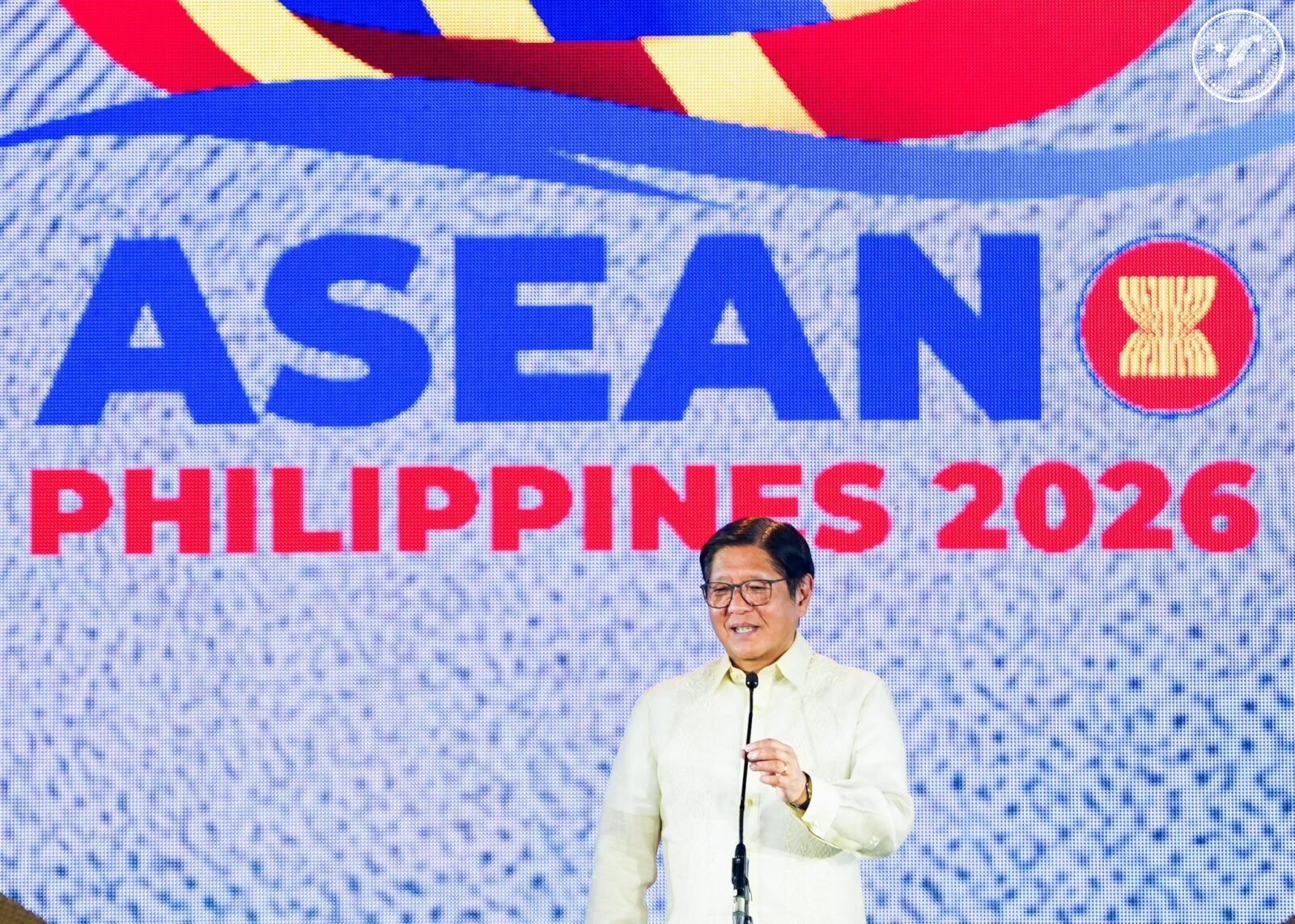
The Philippines’ 2026 theme is “Navigating Our Future, Together.”
That theme is either branding or a blueprint. Undersea governance is where it can become the latter—because it’s a practical agenda that doesn’t require ASEAN to “pick sides.” Protecting cables is about protecting ASEAN’s economic bloodstream.
Manila’s chair year already opened with the foreign ministers’ retreat in Cebu, which Reuters described as focused on major regional challenges like Myanmar, South China Sea tensions, and the Thailand–Cambodia situation. Those issues will dominate headlines. But undersea resilience is exactly the kind of quietly decisive agenda chairs can advance: measurable, operational, and hard to roll back once built.
Stop Treating the Seabed as an Add-On
ASEAN’s maritime conversations still revolve around what you can see: coast guards, fishing disputes, gray-zone coercion, patrol choreography. The seabed is the blind spot.
So Manila should spend 2026 building what ASEAN lacks: regional plumbing—a shared operating system for preventing, detecting, responding to, and recovering from undersea incidents.
Not a glossy declaration. A working toolkit.
Five Deliverables Manila Can Lock In
1) Create a standing ASEAN undersea infrastructure track that actually has continuity.
Not a one-off workshop. A formal track that bridges the political-security, economic, and digital pillars—because cables are all three. Give it a mandate: coordinate standards, map shared vulnerabilities at a high level, align capacity-building, and build incident-response habits.
2) Write the seabed into ASEAN’s doctrine—not as militarization, as governance.
ASEAN has an ASEAN Maritime Outlook, but it remains largely surface-focused. Manila should push an update or addendum that treats subsea infrastructure as part of the maritime commons: cable protection norms, repair-access principles, information-sharing expectations, and crisis management procedures. The point is to make governance legible.
3) Standardize the “what happens first” playbook.
Right now, many cable incidents are handled case-by-case. That’s exactly what a hostile actor—or even a reckless actor—counts on. ASEAN needs an ASEAN Cable Incident Response Protocol:
- designated national contact points,
- pre-agreed notification steps,
- emergency permitting templates for repairs,
- evidence-preservation guidelines,
- and a clear way to integrate private cable consortia without compromising national security.
4) Normalize joint presence in the least politically toxic places first.
ASEAN doesn’t need to pretend it can do large-scale joint patrols everywhere. Start where the politics are easiest and the payoff is clear: coordinated patrol windows around cable landing areas, joint exercises on escorting repair vessels, shared maritime domain awareness feeds for suspicious activity near critical nodes. Deterrence is often just routine.
5) Build an ASEAN-owned capacity pipeline, not vendor dependence.
Many ASEAN states lack basic undersea awareness tools and post-incident forensic capacity. Manila should build a capability roadmap: who needs what, who can train whom, what can be pooled, and how external partners help without fragmenting the effort. Partners like Australia, Japan, the EU, South Korea, and the U.S. say they want capacity-building; here’s an agenda that measures seriousness by systems that still work when disruption hits.
Link It to Energy Before the Stakes Multiply
One smart framing move: tie this to ASEAN’s future energy connectivity. As the region explores subsea power links and grid integration, the governance challenges overlap with telecom cables—permitting, maintenance, protection, incident response. If ASEAN waits until subsea power cables are widespread, it will be governing higher stakes with the same weak routines.
The Political Pitch That Works
Manila should avoid the lazy framing: “counter China” or “support the U.S.” That splits ASEAN members and turns a functional agenda into bloc politics.
The better frame is simple: protect ASEAN’s economic bloodstream. That lets every member cooperate without signing up to someone else’s rivalry.
What Success Looks Like by End-2026
Not a summit photo. A few hard-to-reverse upgrades:
- a formally elevated ASEAN mechanism on undersea infrastructure with a work plan,
- a doctrine update that makes the seabed a governance priority,
- a real incident-response protocol tested in an exercise,
- regularized escort/repair procedures,
- and a capability roadmap that coordinates partners rather than multiplying incoherent projects.
ASEAN has spent decades trying to manage turbulence. The seabed is a chance to do something more ambitious: build resilience that is measurable and shared. The Philippines has the gavel in 2026. If it uses it well, ASEAN’s most important security upgrade may not be another ship or another statement—but the rules and routines that make the seabed harder to exploit than the politics above it.