


By Akira Fujiwara, Educational Worker
According to a survey by Okinawa Prefecture, from 1972—the year Okinawa reverted to Japanese sovereignty—through 2025, there were 6,409 arrests of U.S. military personnel, its civilian employees, and their families for criminal offenses under the Criminal Law. The number has continued to rise in recent years, reaching 101 cases in 2025—the first time it has exceeded 100 in 22 years. Of these, approximately 600 were violent crimes such as murder, robbery, and rape. Moreover, since these figures represent only arrests, the actual numbers are likely much higher.
Regarding aircraft-related accidents leading to major disasters involving loss of life and property, there were 898 incidents over the 51-year period from 1972 to 2023. These include the crash of a U.S. military fighter jet at Miyamori Elementary School in Ishikawa City (now Uruma City) in central Okinawa Island in 1959, which killed 17 people—including 11 children—and left 210 others with serious or minor injuries; the incident in 2004 in which a large U.S. Marine Corps helicopter crashed into and burst into flames at the main building of Okinawa International University (2004), the crash of an Osprey near a residential area in Nago City (2016), and the incident in which a window frame weighing approximately 8 kilograms fell from a large helicopter in flight onto the schoolyard of Ginowan City’s Futenma Second Elementary School during a physical education class (2017). Each time, those directly affected have sacrificed their daily lives to protest, and while the government and the U.S. military have repeatedly made verbal promises to prevent such incidents from recurring, in reality, the number of victims has continued to rise.
Can we really say we take a neutral stance—neither siding with the victims nor the perpetrators—when people are exposed to noise almost every day, when PFAS are being dumped and contaminating drinking water, when preschool-aged girls are assaulted, when adult women are murdered and dumped on the side of the road, or when parents working to make ends meet by collecting spent bullets at a shooting range are shot dead because they were “perfect targets”? There is no such thing as neutrality here.
The struggle against U.S. military bases exists as the inevitable result of this dangerous daily reality and history of humiliation. It is Okinawa’s cry of “Enough is enough!”
What is needed is not a “neutral” stance, but the facts. And it is those who are being oppressed and killed who determine the facts.
Moreover, the U.S. military is repeatedly committing massacres and looting even in places thousands or tens of thousands of kilometers away. Therefore, Okinawa is the front line of Japan’s peace movement and the battle against attempts to amend the Constitution, and it stands in the crosshairs of attacks by the enemy class.
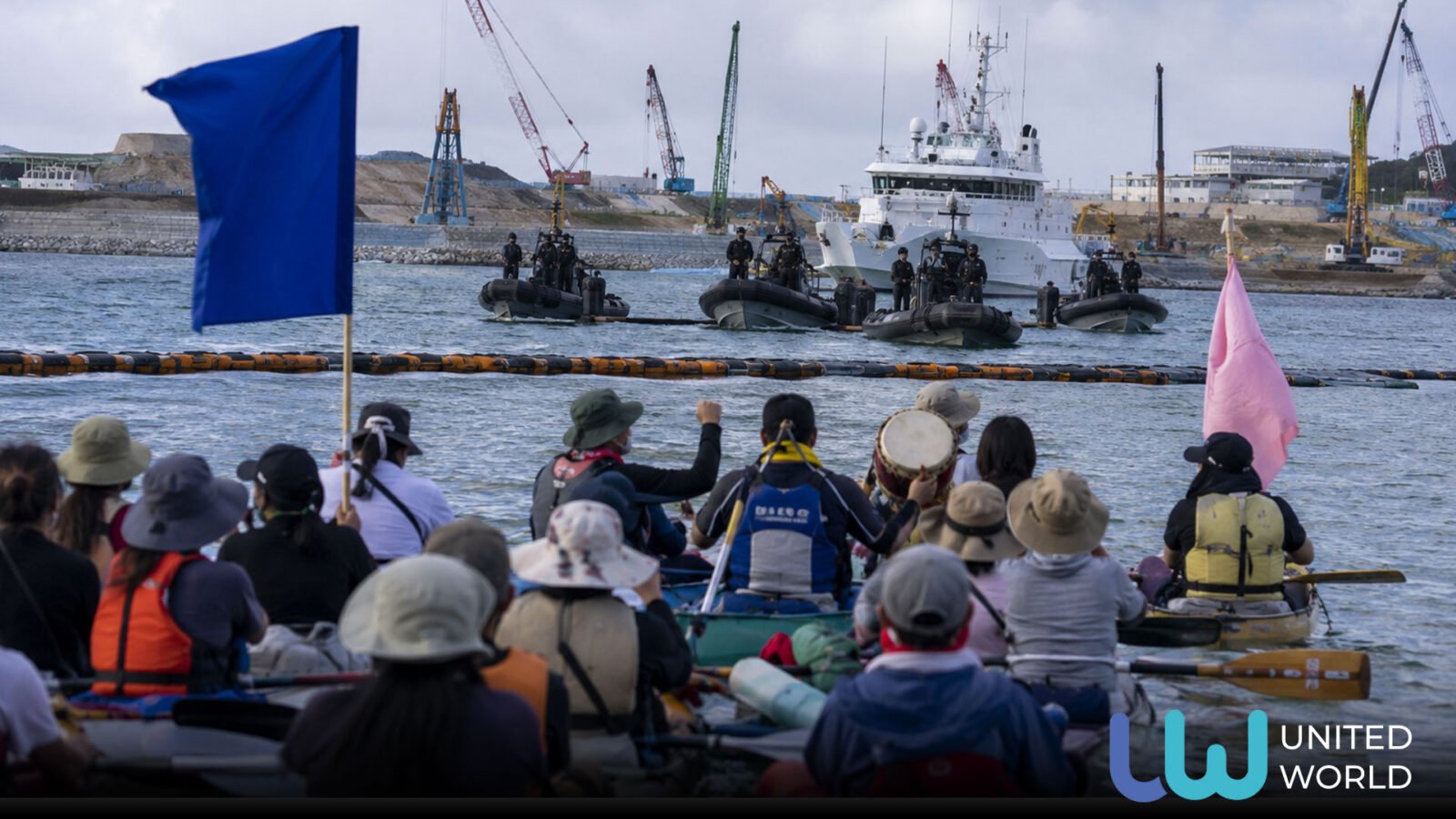
The Ministry of Education’s crackdown on Doshisha International High School—citing alleged violations of the Fundamental Law of Education, taking advantage of the recent drowning accident at Henoko in March, goes beyond mere suppression of the school’s peace education; they constitute a crackdown on peace education and the peace movement in Japan as a whole.
However, among those opposing this attack, the majority point out the inadequacy of safety measures for surveillance vessels at the Henoko base construction site and argue that discussions regarding safety measures—or the investigation into the cause of the accident, safety measures, and the violation of neutrality in peace education—should be kept separate. I find this reasoning flawed.
The tragedy that befell those who were selflessly leading the movement on the front lines cannot be reduced to a mere issue of safety measures. Isn’t it an indisputable fact that if the base didn’t exist—if the government hadn’t forcibly pushed ahead with base construction at Henoko—the anti-base struggle, and consequently this drowning accident, would never have occurred?
It is infuriating that the very party responsible for creating the cause is conducting an investigation into the cause with a feigned innocence, isolating only the “accident” to cover up the root cause and claiming that safety measures were inadequate. If they are truly serious about “investigating the cause,” they must insist on halting and dismantling the base construction. Even if safety measures were insufficient (though those directly involved have reported that adequate safety measures were in place), that would be a matter of discipline within the protest movement itself; those launching attacks—or those who tacitly condone them—are in no position to offer criticism.
We must recognize that U.S. military bases in Okinawa—and indeed throughout Japan—exist solely to serve the interests of the ruling class. This has become increasingly clear today, as these bases serve as launch pads for the U.S. military’s global aggression and massacres. However, a certain perception has spread and taken root not only among the government and the ruling party but now even among some segments of the peace movement. Namely, it is the belief that China, Russia, DPRK, and others might invade our territory, violently seize our wealth, and threaten our peaceful lives. Based on this perception, military expansion is advocated or tolerated, and the Constitution’s pacifist principles are brutally derided as “naive idealism.”
However, the historical reality is exactly the opposite. Looking at post-World War II history alone, we see the Korean War, the Vietnam War, the Gulf War, the Iraq War, the invasion of Kosovo, and—as we witness today—the repeated destruction and massacres caused by airstrikes in Palestine, as well as invasions of Iran and Venezuela and numerous instances of military threats and sanctions against Cuba. If we add to this the instances where vast sums of money and intrigue were used to plot coups and provoke civil wars in Iran, Guatemala, and Cuba (through the active efforts of the NED and the CIA), the reality is that the U.S.-centered “Western nations” (recently referred to as “like-minded nations”) have constantly and relentlessly repeated acts of aggressive war and their support for such actions. Even in the case of the war in Ukraine, while it is true that Russia launched a military invasion, behind the “Maidan Revolution” that triggered it lay massive funding and organized political intervention from the United States (with figures ranging from then-U.S. Assistant Secretary of State Victoria Nuland to U.S. Vice President Joe Biden participating in political rallies in Kyiv and even giving campaign speeches in support of pro-Western candidates), completely disregarding the “principle of non-interference in internal affairs.” And all of this was done in the name of “freedom and democracy.”
The view that “they’re all the same”—a commentary on the fact that China, Russia, and DPRK all continue to expand their military capabilities, possess nuclear weapons, and claim to be doing so for defensive purposes—appears to have become widely accepted. However, can we really say that the aggressor and the victim, the side currently waging a war of aggression and the side that is not, and the side engaging in military intimidation under the guise of “military exercises” almost on a daily basis and the side on the receiving end of such threats are on equal footing? There is no “neutral” stance here either.
Why is Japan’s capitalist class—that is, the Takaichi administration, its political expression—rushing at a breakneck pace to prepare for war through moves such as constitutional revision, the criminalization of desecrating the national flag, attacks on peace education, the creation of a Japanese version of the CIA (National Intelligence Council and National Intelligence Agency), and interference in peace education? Of course, this is not a choice driven by right-wing ideology, but rather to once again reap exorbitant profits in the East Asian region. They are doing this to generate overwhelming support from the “people.” They recognize the crisis facing capitalist society: they cannot survive unless they somehow shift the energy of mass discontent—fueled by rising prices, falling wages, the widening wealth gap, declining standards in education, healthcare, and welfare, falling birth rates and a shrinking workforce, deteriorating infrastructure, and the ceaseless eruption of the undeniable contradictions of capitalist society—onto other targets. It is necessary to shift the blame for this crisis onto foreigners through “xenophobia,” onto the inner lives of individuals through the doctrine of personal responsibility, and onto China, DPRK, and Russia as the causes of economic stagnation and military expansion. To provide emotional support for these efforts, they must foster nationalism—and, as its cornerstone, a baseless attachment to the imperial system, the national flag, and the national anthem.
At such times, peace education that opposes military expansion and military bases, the fundamental human rights that underpin social security and human equality, and democracy for the people—in other words, the Constitution of Japan—are inevitably seen as obstacles.
What is needed on the side of the working class and the people who resist the intentions of the capitalist class? First, core activists must recognize the reality of class conflict in all their efforts and consciously assert and debate this reality in every situation. Through debate, they must learn dialectics and acquire the intellectual capacity to resist.
Published in Shiso Undo – July 2026 (No. 1126)