


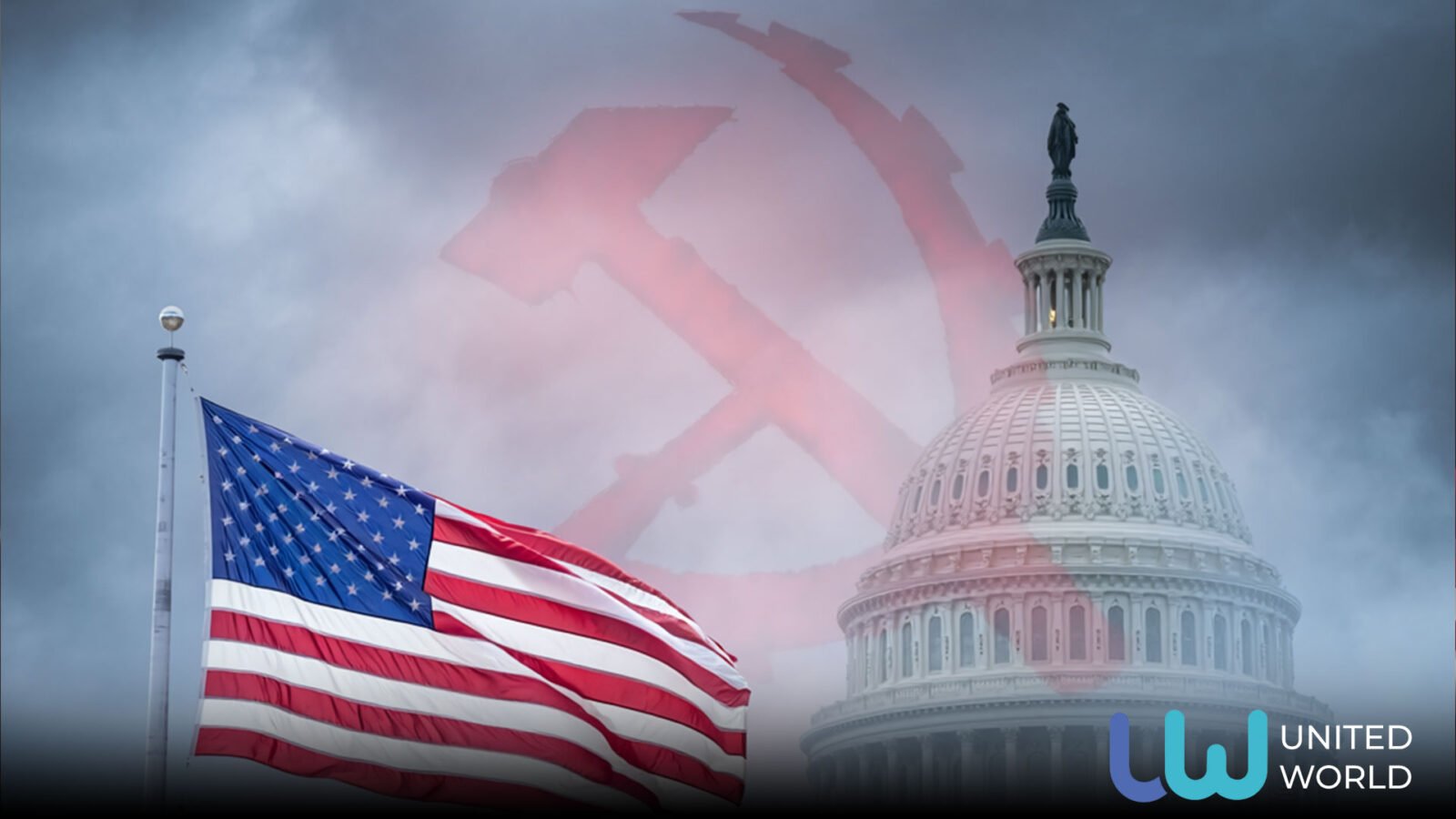
Last week we left open the questions about: What is really happening in the United States? And why the desperation of its elites?
The answers might lie in a series of election results in recent months that are producing what the mainstream media are calling “a shift of the Democratic Party to the far left,” placing the “socialist and Muslim” Zohran Mamdani in the leadership. These are the specters that haunt the American elite: socialists and Muslims.
In recent days, Democratic Socialist (DSA) Melat Kiros defeated Congresswoman Diana DeGette, a veteran running for her 16th term, in the race for a congressional seat in Denver, Colorado, adding another victory for the so-called – according to the political lexicon of the United States – “radical leftists of the Democratic Party.”
This trend that originated in New York is spreading to the rest of the country. In the municipal elections in early November of last year, to everyone’s surprise, voters elected Katie Wilson, the DSA candidate, in this northwestern port city of nearly 800,000 inhabitants.
Now in Colorado, Kiros, originally from Ethiopia, won the Democratic primary. This 32-year-old candidate, who is also active in the DSA, wants to abolish U.S. Immigration and Customs Enforcement (ICE)—which has become Trump’s Gestapo—and grant citizenship to 20 million undocumented immigrants. This has generated strong controversy, since, according to spokespeople for the system, Kiros is prioritizing the interests of foreigners over American sovereignty, and they question her loyalty to the United States, given that she entered the country through the visa lottery.
Under the leadership not of Senator Bernie Sanders but of Mamdani, who describes himself as a “democratic socialist” and has established himself as the guide of this current within his party, a series of candidates are winning in elections in which they participate against the representatives of the more traditional and right-wing wing of the Democrats who have been losing ground.
In New York, three candidates backed by the mayor won the Democratic primaries for the House of Representatives, highlighting the rise of this movement within American politics as disillusionment grows, particularly among young people, with the Democratic Party establishment. Democrats now face a real dilemma. Conservative factions within the party watch the DSA’s overwhelming force with a mixture of dismay and concern over the risks of choosing candidates “too far to the left” who might fail to connect with the majority of Democratic voters.
Even some members of Congress who supported Mamdani in his New York mayoral election and who, in the past, have been close to other leaders on the left wing of the Democratic Party, have not been endorsed by Mamdani. This is the case of Congressman Adriano Espaillat, who lost his reelection bid in District 13 to Darializa Avila Chevalier, a member of the Democratic Social Alliance (DSA). Avila Chevalier, who once helped organize pro-Palestinian protests at Columbia University, has never held public office.
Another candidate backed by Mamdani, Claire Valdez, won the nomination to represent the Democrats in the race for the seat of long-serving Puerto Rican congresswoman Nydia Velázquez in New York’s 7th Congressional District. This district comprises the boroughs of Brooklyn and Queens. Queens is the largest borough in New York City and, ethnically, the most diverse in the world. With 2.35 million residents, it is the second most populous borough after Brooklyn, which has a population of over 2.6 million.
In this context, the U.S. House of Representatives elected Democrat Analilia Mejia to replace current New Jersey Governor Mikey Sherrill, who resigned as representative of the 11th Congressional District after winning the November election. Mejia, whose mother is Colombian and father Dominican, and who helped manage Senator Bernie Sanders’ 2020 presidential campaign, easily defeated Republican Joe Hathawa. The new congresswoman will complete the remaining eight months of Sherrill’s term in the House and will run for the seat for the next two years in November.
Mamdani’s rise highlights a debate within the Democratic Party about whether its future lies in competing for votes from the right or adopting more progressive positions. This situation has sparked an internal discussion of paramount importance in the lead-up to the next congressional election.
In an interview with CNN, lawyer and civil and environmental rights activist Van Jones described it as “a battle between the establishment and this insurgency,” which brings together sectors of the “far left, socialists, and Muslims.” Jones added that “…the ceiling is collapsing on the power of the Democratic Party,” because “this is no longer just a movement: it’s a movement and a machine at the same time.”
Washington and Los Angeles have also joined this wave of change with mayoral candidates Janeese Lewis George and Karen Bass, respectively. Bass is running for reelection in Los Angeles, while Lewis George, a former councilwoman for District 4 and a member of the Democratic Socialist Alliance (DSA), won the Democratic primary for mayor of Washington, D.C., on June 16th with such a resounding victory that it ended the race even before all the votes were counted, and by the widest margin the city has seen in two decades. In this predominantly Democratic city, that victory virtually guarantees she will be the next mayor, and the first with an explicitly socialist platform to lead the nation’s capital. Both candidates are African American.
This entire avalanche has led President Donald Trump to say that the Democrats have become “godless, hardline communists.” Trump asserted that these candidates were the greatest threat to the United States in its entire history.
Veteran Senator Bernie Sanders has opined that “the tide is turning,” because—according to him—Americans are tired of the politics of the status quo and “want representatives in Congress who will stand up to the oligarchy and fight for working families.”
The academic Russell Berman, professor of the Stanford University In an article for “The Atlantic” magazine, he explains it by saying: “For a year and a half, Democrats have felt repulsed by Trump. They have also felt outraged by the ineffectiveness of their own party’s leaders. Now, after a series of surprising primary elections, a third observation is gaining traction: the Democratic base would like to throw the entire political establishment into a meat grinder.”
All this movement, which will have immediate repercussions in the upcoming midterm parliamentary elections, will also have effects on the 2028 presidential elections. In this context, while in the Republican field it is unknown who could lead the presidential candidacy in a context where the main candidates seem to be the Secretary of State, Marco Rubio, and Vice President JD Vance, in Democratic territory the first perceptible shake-up in presidential projection was observed.
The strength, deep roots, and expansion of Mamdani beyond the limits of New York City prompted former Vice President Kamala Harris, until now a leading Democratic presidential candidate, to seek out to him “for dialogue.” But Harris hasn’t stopped there. According to the American news website Axios, the former vice president “has held private meetings with other prominent progressive figures, including pro-Palestinian activists, to bridge the gap with the party’s left wing.”
It is clear that a major upheaval is shaking the American political landscape, revealing an internal reality that exposes these movements and explains the furious reaction of Trump and his cronies. Next week we will discuss some of the international repercussions of this phenomenon.
TO BE CONTINUED…