


By Azar Mahdavan, from Tehran / Iran
Following the two recent wars imposed on Iran and Washington’s latest breach of commitment by withdrawing from the “Islamabad Understanding,” Iranian public opinion on negotiations has become more closely tied than ever to questions of trust, security and national interests.
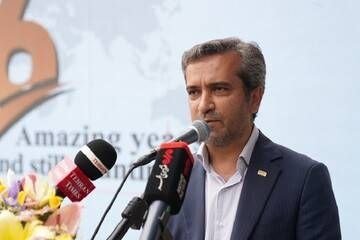
In an interview with Mohammad Sarfi, editor-in-chief of the Tehran Times, we examined how recent developments have shaped public attitudes, what Iranians expect from an acceptable negotiating process, the place of economic and security concerns, and the public’s expectations of Iran’s negotiating team.
In light of the two recent wars imposed on Iran and Washington’s latest breach of commitment by withdrawing from the “Islamabad Understanding,” how do you assess Iranian public opinion toward the very idea of negotiations with the United States? Is Iranian society now more supportive of negotiations, or does distrust remain dominant? What are the main factors shaping this outlook?
Iran is a country of 90 million people with a diverse and pluralistic society. It is therefore only natural for such a society to encompass a wide range of views on different issues. This diversity of opinion is itself a sign of a vibrant and dynamic society. For that reason, one cannot categorically claim that Iranian public opinion thinks or behaves in one particular way.
Negotiations with the United States are no exception. We are dealing with a broad spectrum of views. At one end are those who reject any form of negotiation and even regard it as a kind of betrayal. At the other are those who believe negotiations remain the preferable course under virtually any circumstances.
I believe the experiences of recent years—particularly those of the past year and the 12-day war—have had a significant impact on public attitudes. Iran entered into the JCPOA, only for Donald Trump to violate and abandon the agreement during his first term in office. Even during his second term, Iran did not close the door to diplomacy, yet both attacks against the country took place while negotiations were underway. We are now also witnessing renewed attacks following the Islamabad Understanding.
Taken together, these experiences have made Iranian society, broadly speaking, more skeptical of and distrustful toward negotiations with the United States than it was in the past.
Assuming that most Iranians do not oppose negotiations in principle, what characteristics would an acceptable negotiating process have in their view? In other words, what red lines, guarantees and tangible outcomes would be necessary to secure public support?
The first and most fundamental point is that people must not feel that an agreement has compromised their national pride. Any agreement perceived as undermining Iran’s dignity would undoubtedly be rejected by the public.
Beyond that, I believe two issues are of paramount importance to Iranians: first, ensuring security; and second, improving livelihoods. If people become convinced that an agreement can genuinely strengthen their security and deliver meaningful economic improvement, they will support it.
As for guarantees, the unfortunate reality is that today’s world increasingly resembles a jungle in which virtually nothing is truly guaranteed. Diplomatic signatures, international agreements, international law and even United Nations Security Council resolutions are routinely violated.
In such a world, the ultimate guarantee behind any agreement is a country’s own power. The Iranian people understand this reality very well.
To what extent have economic hardship, sanctions, livelihood concerns and security threats affected public attitudes toward negotiations? Have economic demands overtaken political and ideological considerations, or is there still a balance between them?
As I noted in response to the first question, the answer depends largely on where one stands within the spectrum of Iranian public opinion. Before anything else, however, it must be recognized that separating these issues from one another is fundamentally misguided. They are deeply interconnected.
Iran is facing an existential war. The United States and the Israeli regime have openly spoken of destroying Iran, and the nature of their attacks confirms that objective. In such a conflict, a nation must defend itself with its full strength and every capability at its disposal.
Under these circumstances, negotiations no longer carry their conventional meaning. The adversary views negotiations not as a means of ending war and de-escalating tensions, but as cover and an instrument for aggression and domination.
It is often argued that support for or opposition to negotiations between Iran and the United States is largely shaped by competition among domestic political factions. How do you assess this argument, and what has primarily driven Iranian public distrust of negotiations with Washington?
It is natural that some disagreements over negotiations stem from partisan and political divisions. However, I believe that under the present circumstances, these differences have become less pronounced than before. Moreover, the divisions that remain are neither central nor particularly consequential.
The reason is clear: the country is in a state of war. The main issue in Iran today is not whether to negotiate. The central issue is the war itself and, in effect, the defense of Iran.
The opposing side has demonstrated that it is unwilling to abide by any rules or laws, including the most basic humanitarian principles. A glaring example was the attack on an elementary school in Minab on the first day of the war, which killed more than 100 children.
In such an environment, most political figures and factions possess enough prudence not to turn issues such as negotiations into a source of political infighting. The Leader of the Islamic Revolution has also repeatedly emphasized the importance of unity and cohesion among both the public and state officials, including in his latest message. I believe this clear and serious call for unity has undoubtedly helped contain and reduce political divisions.
If the negotiating team were to proceed solely with the aim of addressing public demands, what would be the principal priorities of Iranian public opinion today? More broadly, should public opinion serve as the benchmark in major and highly complex matters such as negotiations with the United States, regardless of their level or subject?
Despite the diversity and plurality of views within Iranian society, the Iranian people see their country as having emerged proud and victorious from this war.
In Iran’s modern history, each time the country was subjected to foreign aggression, part of its territory was separated from it. In these two wars, however, Iran confronted the world’s most powerful military force—a formidable and malign power. Despite all the wounds and damage it has endured, Iran has stood its ground and, from a strategic perspective, has so far emerged victorious.
It is therefore natural for the Iranian people to expect the negotiating team to defend this victory at the diplomatic table and consolidate it through diplomacy.
That is a broad public expectation. Diplomacy, however, is a highly specialized and exceptionally complex field involving numerous intricacies. One cannot simply take to the streets and ask the public to determine every detail of a negotiating process. Such matters require professional expertise and must be handled by diplomats.
As in every other country, Iranian diplomats are not expected to consult the public over every line of correspondence or every stage of diplomatic bargaining. Nevertheless, the overall direction and outcome of their work must serve the national interest. If the national interest is secured, public opinion will undoubtedly respond positively.
I would also like to conclude by emphasizing that the war Iran is facing today did not begin on February 28. It is far broader and more deeply rooted than that. The latest conflict merely represents a new phase of a much longer war.
This war has multiple dimensions, some of which remain partly concealed. One such dimension is the cognitive and psychological warfare being waged against Iran. This is an extensive subject that I do not intend to explore here. I will limit myself to one observation: the United States and Israel, while sanctioning, bombing and killing the Iranian people, are simultaneously attempting—through various tactics—to speak on behalf of those very same people.